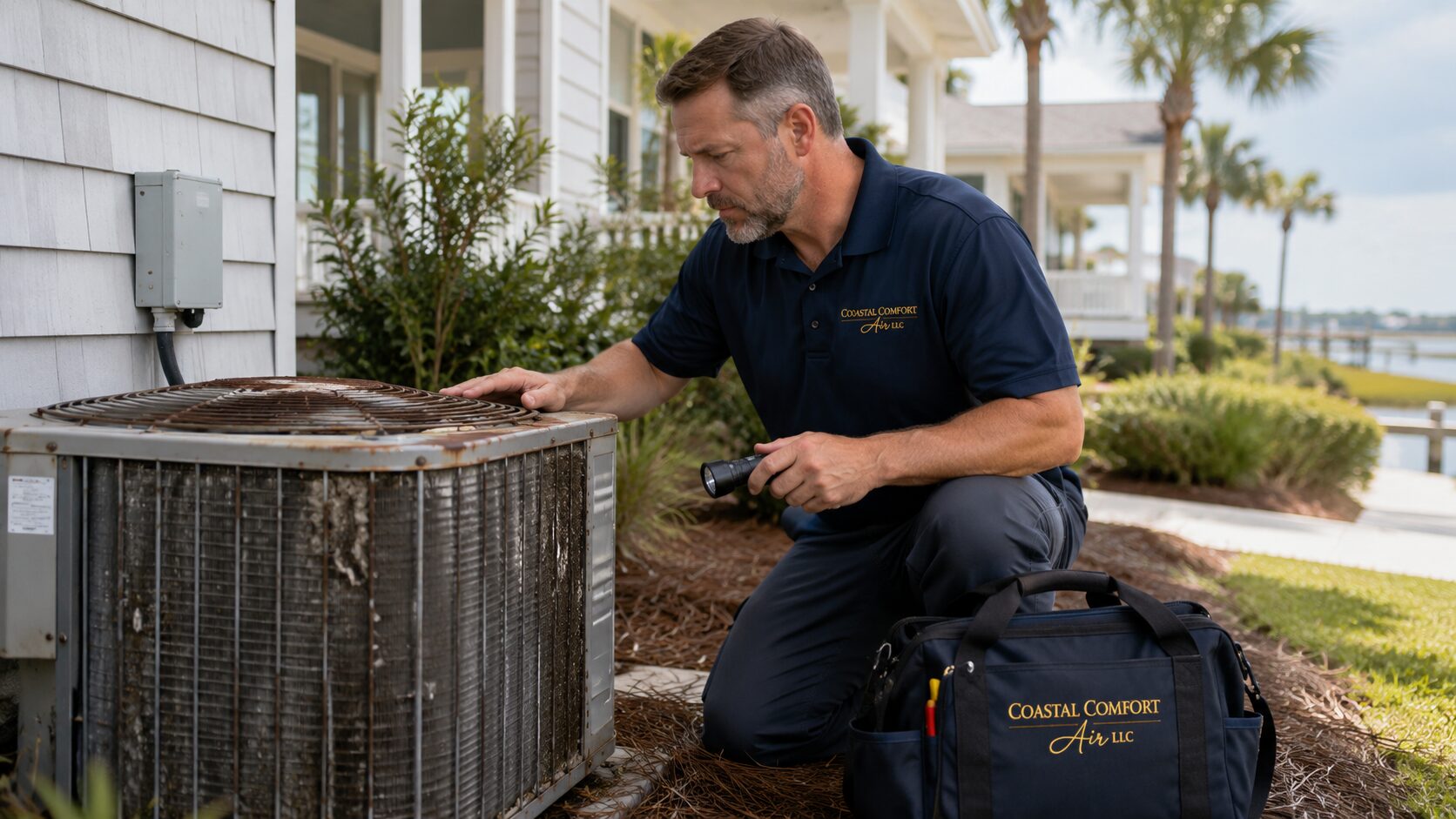
No homeowner wants to hear that it’s time to replace their HVAC system. After all, it’s a major investment, and if your heating or air conditioning still turns on, it may seem easier to keep repairing it. But there comes a point when continuing to fix an aging system costs more than upgrading to a newer, more efficient model.
Knowing when to replace your HVAC system can save you money, improve your home’s comfort, and prevent the inconvenience of an unexpected breakdown. If you’ve been scheduling repair after repair or noticing your utility bills creeping higher each month, your system may be trying to tell you something.
Here are five of the most common signs that it’s time to consider replacing your HVAC system.
1. Your HVAC System Is More Than 10–15 Years Old
Age is one of the biggest factors when deciding whether to replace your HVAC system. While many systems can last 15 to 20 years with proper maintenance, they naturally become less efficient as components wear out and technology advances.
If your air conditioner or heat pump is more than a decade old, it may already be using significantly more energy than today’s high-efficiency systems. Older units also tend to require repairs more frequently because parts experience years of wear and tear.
In Wilmington, where air conditioners work hard through long, humid summers, even a well-maintained system can begin showing its age sooner than homeowners expect.
If your system is approaching the end of its expected lifespan, replacing it before it fails completely gives you more time to explore your options rather than making a rushed decision during an emergency.
2. Repairs Are Becoming More Frequent
Occasional repairs are a normal part of owning an HVAC system. However, if it feels like you’re calling your HVAC technician every few months, it’s worth asking whether those repair costs are adding up to more than the system is worth.
Many homeowners fall into the trap of replacing one part after another, hoping each repair will solve the problem for good. Unfortunately, as a system ages, fixing one worn component often reveals another that’s close to failure.
A helpful guideline many homeowners use is the “50% Rule.” If the cost of repairing your HVAC system approaches half the cost of replacing it, investing in a new system is often the better long-term decision.
Instead of continuing to put money into aging equipment, a replacement can provide greater reliability, lower operating costs, and fewer unexpected service calls.
3. Your Energy Bills Keep Increasing
Have your utility bills been climbing even though your energy habits haven’t changed?
An aging HVAC system is often one of the biggest reasons homeowners experience rising energy costs.
Over time, components wear down, motors lose efficiency, refrigerant systems become less effective, and airflow restrictions develop. As a result, your HVAC system has to work harder and run longer to maintain the same indoor temperature.
While rising energy prices can certainly contribute to higher monthly bills, a noticeable increase without any change in your home’s usage often points to declining HVAC performance.
Modern high-efficiency systems are designed to use less energy while providing more consistent heating and cooling. In many cases, the monthly energy savings help offset the cost of a new installation over time.
4. Your Home Is No Longer Comfortable
Your HVAC system should keep every room in your home comfortable throughout the year. If some rooms feel too warm while others stay cool, or if your system struggles to maintain the temperature you’ve selected on the thermostat, it may no longer be capable of meeting your home’s needs.
Inconsistent temperatures can develop for several reasons, including aging equipment, declining airflow, failing components, or systems that were improperly sized when they were originally installed.
Homeowners in Wilmington also know how important humidity control is. If your home suddenly feels damp or sticky during the summer, your air conditioner may no longer be removing moisture effectively. High indoor humidity not only affects comfort but can also contribute to mold growth and poor indoor air quality.
A properly sized, modern HVAC system provides more even temperatures, better airflow, and improved humidity control throughout your home.
5. Your HVAC System Makes Strange Noises or Produces Unusual Odors
Every HVAC system makes some noise while operating, but loud or unusual sounds should never be ignored.
Grinding, banging, squealing, rattling, or buzzing often indicate worn mechanical parts or failing components. While some issues can be repaired, repeated noises from an older system may signal that multiple parts are beginning to wear out.
Likewise, unusual odors can point to electrical problems, mold growth, overheating components, or other issues that require professional attention.
If strange sounds or smells become recurring problems, replacing the system may be the safest and most cost-effective solution.

Benefits of Replacing an Older HVAC System
While replacing your HVAC system is a significant investment, it also provides several long-term advantages:
- Lower monthly energy bills thanks to improved efficiency.
- Fewer repair costs and greater reliability throughout the year.
- More consistent temperatures in every room of your home.
- Better humidity control, especially during Wilmington’s humid summers.
- Improved indoor air quality with modern filtration options.
- Quieter operation compared to many older systems.
- Peace of mind knowing your system is less likely to fail during extreme weather.
For many homeowners, these benefits make replacement a worthwhile investment that improves both comfort and long-term savings.
Repair or Replace? How to Decide
One of the most common questions homeowners ask is whether they should repair their existing system or replace it altogether.
The answer depends on several factors, including the age of the system, the cost of the repair, and its overall condition.
If your HVAC system is relatively new and has been well maintained, repairing it is often the most economical choice. On the other hand, if the system is over 10 to 15 years old, requires frequent repairs, or struggles to heat and cool your home efficiently, replacement usually provides greater value over the long term.
A trusted HVAC professional can inspect your equipment, explain its condition, and provide honest recommendations based on your home’s needs and budget.
Why Wilmington Homeowners Shouldn’t Wait Too Long
Along the North Carolina coast, your air conditioning system isn’t just a luxury—it’s essential for staying comfortable through months of hot, humid weather.
Waiting until your HVAC system fails completely can leave you without cooling during the busiest time of year, when HVAC companies often experience their highest demand. Planning a replacement before your system reaches that point gives you time to compare equipment options, schedule installation at your convenience, and avoid emergency service.
Replacing an aging system before it breaks down can also prevent costly damage caused by failing components and help ensure your family stays comfortable year-round.
Frequently Asked Questions
How long should an HVAC system last?
Most HVAC systems last between 15 and 20 years with regular professional maintenance. Coastal climates and heavy usage may shorten that lifespan.
Should I replace my HVAC system before it stops working?
In many cases, yes. Replacing an aging system before it fails completely allows you to avoid emergency replacements and gives you more flexibility when selecting new equipment.
Will a new HVAC system lower my energy bills?
Modern high-efficiency systems typically use less energy than older equipment, especially if your current system is more than 10 to 15 years old.
How do I know if repair or replacement is the better option?
A professional HVAC inspection can help determine whether your current system has enough life remaining to justify repairs or whether replacement offers better long-term value.
How long does HVAC replacement take?
Most residential HVAC installations can be completed within a single day, although larger or more complex systems may require additional time.
Upgrade Your Home’s Comfort with Coastal Comfort Air
If your HVAC system is showing signs of age, requiring frequent repairs, or struggling to keep your home comfortable, it may be time to consider a replacement. Investing in a modern, energy-efficient system can lower your utility bills, improve indoor comfort, and provide dependable performance for years to come.
At Coastal Comfort Air, we help homeowners throughout Wilmington, North Carolina, choose HVAC systems that fit their homes, comfort needs, and budgets. Our experienced technicians provide honest recommendations, professional installations, and dependable service every step of the way.
If you’re wondering whether it’s time to replace your HVAC system, contact Coastal Comfort Air today to schedule a professional evaluation. We’ll help you make the right decision with confidence.
Helpful Resources
- ENERGY STAR – Heating and Cooling: https://www.energystar.gov/products/heating_cooling
- U.S. Department of Energy – Air Conditioning: https://www.energy.gov/energysaver/air-conditioning

Be the first to comment